Monday, March 21, 2016

The Driest in 500 Years

For California, the beginning of 2013 was the driest start to a year in the 118 years the state had been doing record keeping. Fast forward to March 2016, and the US drought monitor map for California looks like this. Indeed, California is the driest it has been in 500 years.
US Drought Monitor for the State of California
Image Courtesy of NOAA, USDA, and NDMC
A drought is a "period of below-average precipitation in a given region, resulting in prolonged shortages in its water supply." So it's not like there can be no rain in a given area, it's just that what does come from the sky is less than what normally comes from the sky. In fact, there have been some rains recently, but nothing near enough to bring California back to normalcy. These long term droughts can bring about a lot of issues, which is why California declared a state of emergency on January 14th, 2014 due to the drought.

One issue that rides behind droughts are forest fires. Thanks to the continually dry weather, trees (and other plants) aren't able to take in as much water as they require, causing them to become drier than usual. Additionally, drier air causes more and more water to evaporate from the trees, only making the problem worse. Simplistically, the drier and hotter it is, the more forest fires you'll get. Typically, when something like lightning hits a tree, sure that tree goes away, but nothing much else happens to the area. But when everything is bone dry, that initial lightning strike turns into a massive blaze. In September of 2015, three fires were burning simultaneously, wiping out more than 270,000 acres of forest. The drought, as a whole, has killed (not just burned) 12.5 million trees. These trees will sit on the hills of California even as this drought ends, providing plenty of fuel for future fires. The drought will have a long term impact on the frequency and the severity of forest fires in California.
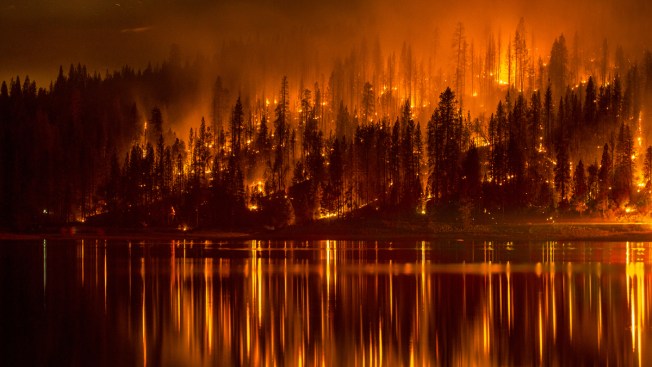
Forest Fire on Sunday, Sept. 14 2004
Image Courtesy of AP
These fires burn through anything in their path, chewing up homes and killing the unfortunate individuals who were not able to evacuate in time. 

The aquifers of California will also be taking a huge, long term hit thanks to the drought. An aquifer is a layer of permeable rock that is able to take in and store water, water that we can then be brought up via wells. This so called 'ground-water' accounts for about 60% of California's water supply. And thanks to the drought, California has drained 41 trillion gallons of ground-water from their aquifers in the central valley.

The Central Valley
Image Courtesy of Visit Central Valley
So much water has been pumped out due to the crops that are grown in this region. The crops (things like almonds, pomegranates, artichokes, and kiwis) are notoriously water greedy, and will die if not given enough water. And thanks to the limited restrictions on how much water a farmer can pull out of the water table, they'll just keep pumping it up to keep their crops alive.
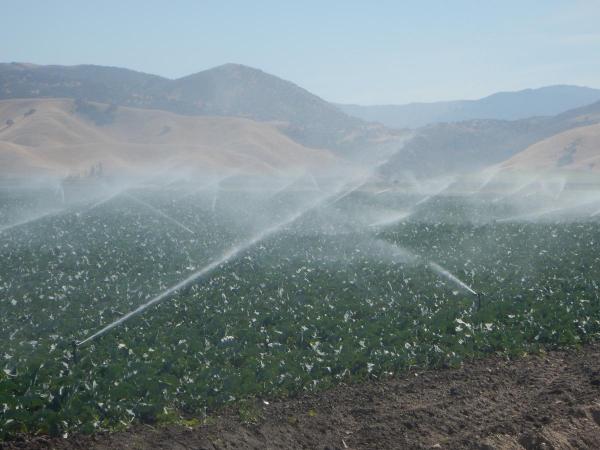
Freshwater being wasted on crops
Image courtesy of Ocean Futures Society
The most frightening fact about these aquifers is that they are not easily replenished. Even with high rainfalls, aquifers will take thousands of years to replenish. The more and more farmers pump, the lower and lower the water table gets. Farmers who were used to drilling 200 foot wells are now having to resort to 1,000 foot (and deeper) wells to reach the water. The declining water table of the California central valley is illustrated in this figure.

California Water Table level (red means decrease) from 2011 to 2012 to 2013
Image Courtesy of Nature.com
So even if this drought ends this year thanks to the El NiƱo, the water table will still be in a dismal state.

So what exactly is California doing to help relieve the stress on it's water crisis? For one, Governor Edmund G. Brown instituted a 25% water savings mandate in 2015 that has been successfully met for 7 months in a row. Additionally, the state is investing money in projects like improved irrigation systems for farms to decrease water usage. Desalination plants are also being built to try to supply California with enough fresh water, but this becomes very costly as it requires large inputs of electricity.

Hopefully this season gives California some much needed rescue, but for now it is much too soon to tell what lies ahead in California's drought crisis. However, even if California exit's its drought, there are still many long term effects of the drought that will plague the state for years to come. 


Wednesday, March 2, 2016

Ignored by the Media

Thanks to the concentrated media spotlight stemming from the scandalous nature of the Flint water crisis (of which I talked about in my first post), almost everyone has heard about the plight of the predominantly low income inhabitants of the Michigan town.

Thanks to the lack of attention from the main stream media (that some say arise due to the long term effects of social bias), I'm sure almost nobody has heard of the long standing water crisis plaguing Native Americans in the west and south west regions of America.

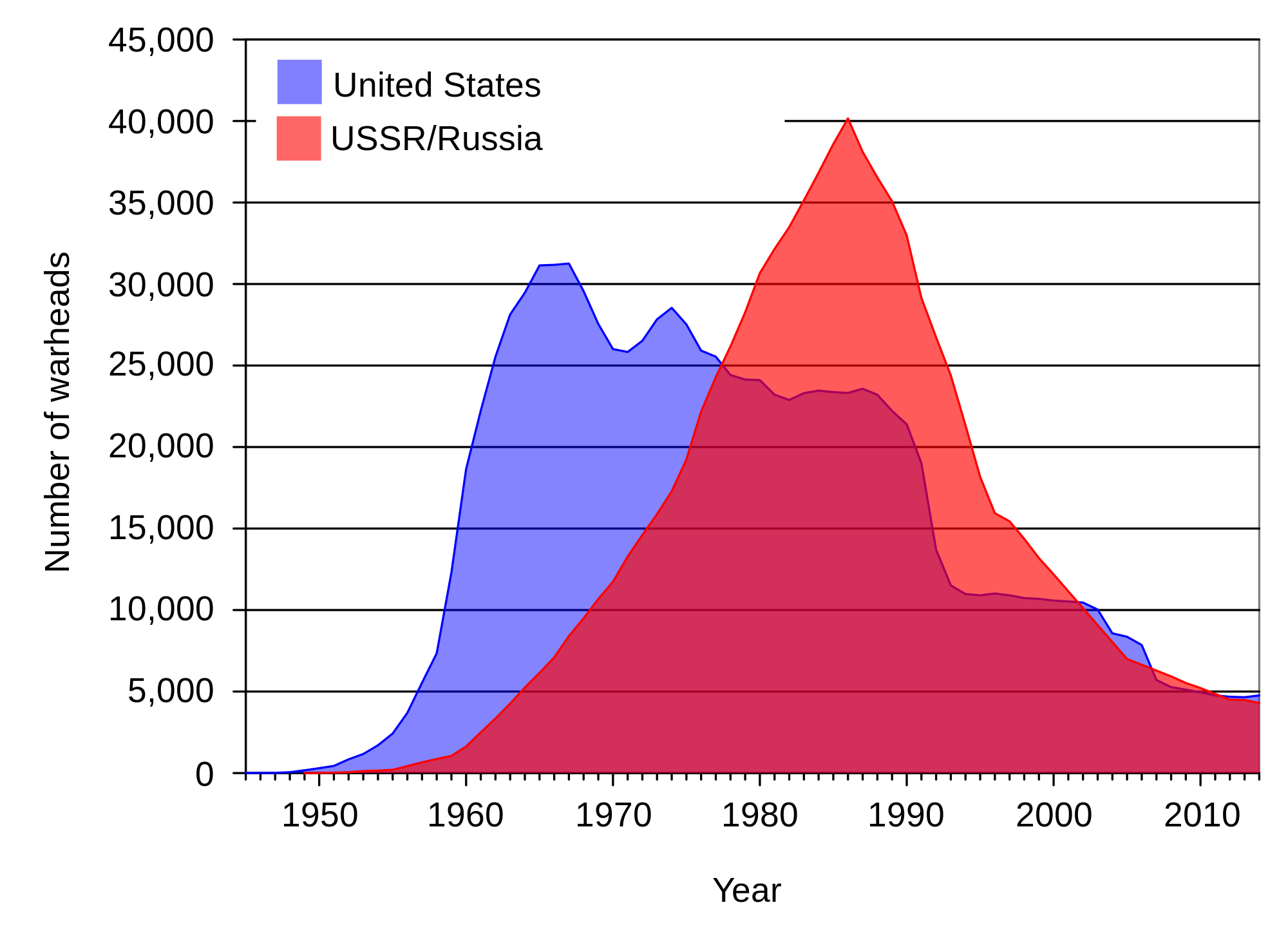
The nuclear arms race of the Cold War caused a drastic and frightening increase in the production of nuclear weapons in America. In the 1960's America had a peak stockpile of over 30,000 nuclear warheads.

Nuclear Arms Race Warhead Arsenal
Image Courtesy of Wikimedia Commons
And in order to produce all of these weapons, uranium is needed. Lots of lots of uranium. And in order to ensure that there was enough uranium to produce all of these warheads, light regulations from the 1800s were still in place that did not take into account the dangers of mining things like uranium. The most impactful of these is the General Mining Law of 1872, which made it so that mines did not have to "undergo reclamation or remediation", which pretty much means that mine owners did not have to clean up after themselves. Already this does not seem like a good idea, and then when you consider just how much uranium was coming out of these mines, the whole situation gets much worse.

Uranium production in tons per state
Image Courtesy energy.gov
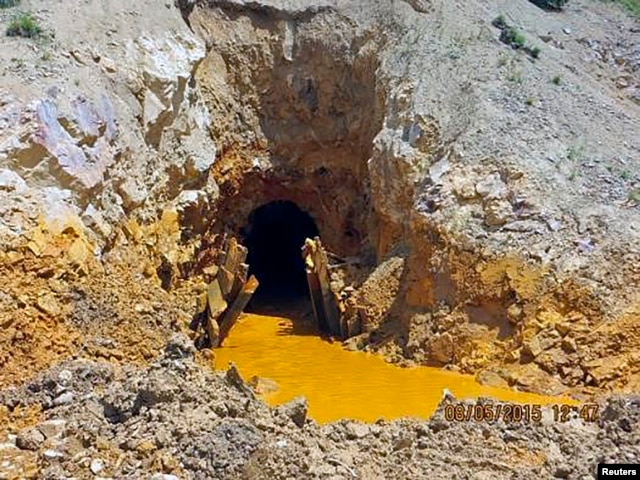
Some of the abandoned mines that resulted when the US got less 'nuke crazy' are just that: abandoned. The owners didn't have to clean up, so they just stood up and left, leaving radioactive waste and gaping holes in the ground. Take this abandoned mine in San Juan County, Colorado. The bright yellow waste water that leaches out of the mines is referred to as "the yellow monster" by the Navajo people who live near them. At a October 2008 House Oversight Committee hearing, a local, Ray Manygoats recalled how his sister accidentally "walked through one of the open ponds near the mill and burned her feet." He now suffers from numerous health problems as a result of his life near the mine.

Image Courtesy of Reuters
This radioactive waste can find it's way into the drinking supply of the people who live nearby, leading to uranium concentrations four times the federal limit. While much of the uranium one takes in is excreted, a portion of it remains in your body, causing kidney damage. Acute exposure to the metal causes other health effects like significant weight loss or hemorrhages.

In addition to these abandoned mines, there is still uranium mining going on in northwestern Nebraska using a technique called in situ leaching, which is injecting oxygenated water into the ground to dissolve the ore, and then bringing the uranium-water solution back to the surface to extract and process the metal. The safety of such a technique is currently being debated (it is questionable whether mining operations can capture all of the solution), but a nearby group of the Oglala Lakota people are saying it is responsible for high rates of cancer and kidney disease.

And it doesn't stop with uranium. Other mining operations that procure metals like copper utilize acidic solutions to most efficiently and quickly gather ore, and the waste of these operations can leach into water, leading to disasters like the Gold King Mine spill in 2015, which turned an entire river bright yellow.

Animas River in Colorado
Image Courtesy of Jerry McBride
The Native Americans have been hard at work protesting the issues at hand, but provisions that allow for continued as well as new mining operations on federal land continue to be slyly tucked into large documents in order to sneak them past Congress and the tribes. For example, a provision allowing for the creation of the "continent's largest copper mine" in a national forest in Arizona (which was protected Apache land) was sneaked into a document that funds the Pentagon.

The main stream media decides not to cover much of the plight of the Native Americans who are trying to prevent such measures to occur. Not even large protests in Washington DC get any media coverage. This is contrast to the huge media outcry brought by the Flint, MI crisis. I won't get political about whether this is due to long standing discrimination or mainstream media's love of a juicy story, but it certainly shows that there are crisis' happening right now that receive little to no coverage, and therefore little to no acknowledgement.